
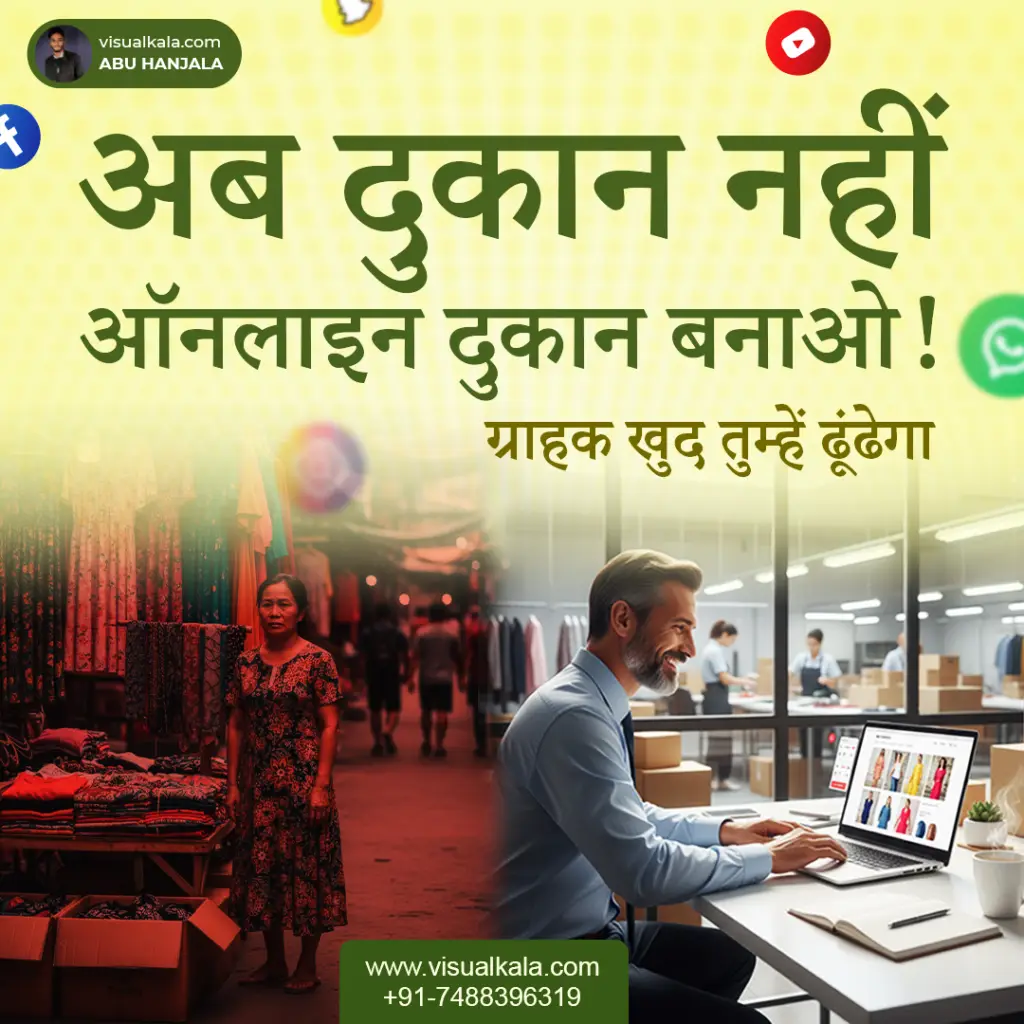
Most offline business owners believe they’re doing “fine.”
They think loyal customers will always come back.
They think word-of-mouth will save them.
They think going online is optional.
It’s not.
Right now, your competitors who moved online are stealing your customers while you sleep.
Not because they’re better — but because they’re visible.
As a brand and e-commerce designer, I work with businesses every day that waited too long…
and paid the price. But I also see the ones who finally go online and grow 10× faster with the
same products and the same skills.
The difference is simple:
Let’s break it down without sugarcoating anything.
Whether you sell clothing, electronics, bakery items, services, or anything else — your customer’s journey starts on a screen.
They search on Google.
They check Instagram.
They compare on marketplaces.
They read reviews.
If you don’t show up in that journey, you don’t even exist.
This is why you need:
A professional website
A clean, credible brand identity
A functional e-commerce setup
Consistent social media presence
The offline world only works inside one location.
The online world works everywhere at once.
People don’t want to:
Ask for prices
Travel to check availability
Call to confirm stock
Walk into a shop hoping the product is there
Online stores solve all these problems instantly.
A proper e-commerce setup gives your customer:
Prices
Variations
Real-time stock
Payment options
Delivery details
No friction.
No delays.
No excuses.
And you?
You get sales even when your shop is closed.
If you think social media is just for showing products, you’re already behind.
A strategic social presence:
Builds trust
Creates a brand voice
Attracts new customers
Retargets people who showed interest
Turns viewers into buyers
Offline businesses die because they rely on random footfall.
Online brands grow because they rely on consistent visibility.
Let’s be blunt:
If your competitors are online and you’re not, you’re handing them your customers for free.
Online gives them:
Lower marketing cost
Higher customer reach
Repeat business through automation
Professional brand perception
Meanwhile, offline business owners complain:
“Market slow hai.”
“Customer aa nahi raha.”
“Competition badh gaya.”
No.
Your problem isn’t competition.
Your problem is invisibility.
Most offline stores lose customers long before the sale.
Why?
Because they look outdated.
A strong brand identity (logo, color palette, typography, visual style) instantly communicates:
Trust
Professionalism
Stability
Quality
Customers choose businesses that look reliable.
If your brand and visuals look cheap, customers assume the same about your products.
A well-designed website:
Explains your brand
Shows your products
Answers questions
Builds trust
Collects leads
Takes payments
Automates orders
You spend on it once.
It works for you forever.
If your business depends on people walking into your shop to buy…
you’re gambling with your income every single day.
This is the part business owners get wrong.
They think:
“Website expensive.”
“E-commerce expensive.”
“Branding expensive.”
But what they don’t calculate is the cost of not going online:
Lost customers
Zero visibility
Slower business growth
No scalable system
Zero online reputation
Limited income ceiling
One month of lost business offline costs more than a full brand + website setup.
When I take a business online, I don’t just “design posts.”
I build a complete digital identity that converts.
That includes:
Branding (logo, colors, fonts, visual language)
Website with strong UX
Complete e-commerce setup
Product catalog design
Social media templates
Marketing strategy
Content flow
Customer conversion system
The result?
A business that:
Looks premium
Sells confidently
Attracts customers who trust it
Grows beyond local limits
Offline keeps you small.
Online makes you scalable.
Customers have moved online.
Your competitors have moved online.
Your industry is moving online.
The only question left is:
Will your business move forward… or get left behind?
If you’re ready to take your offline business online with proper branding, e-commerce setup, and a strategic design approach — let’s talk.
Your product doesn’t need to change.
Your business model does.